Trending

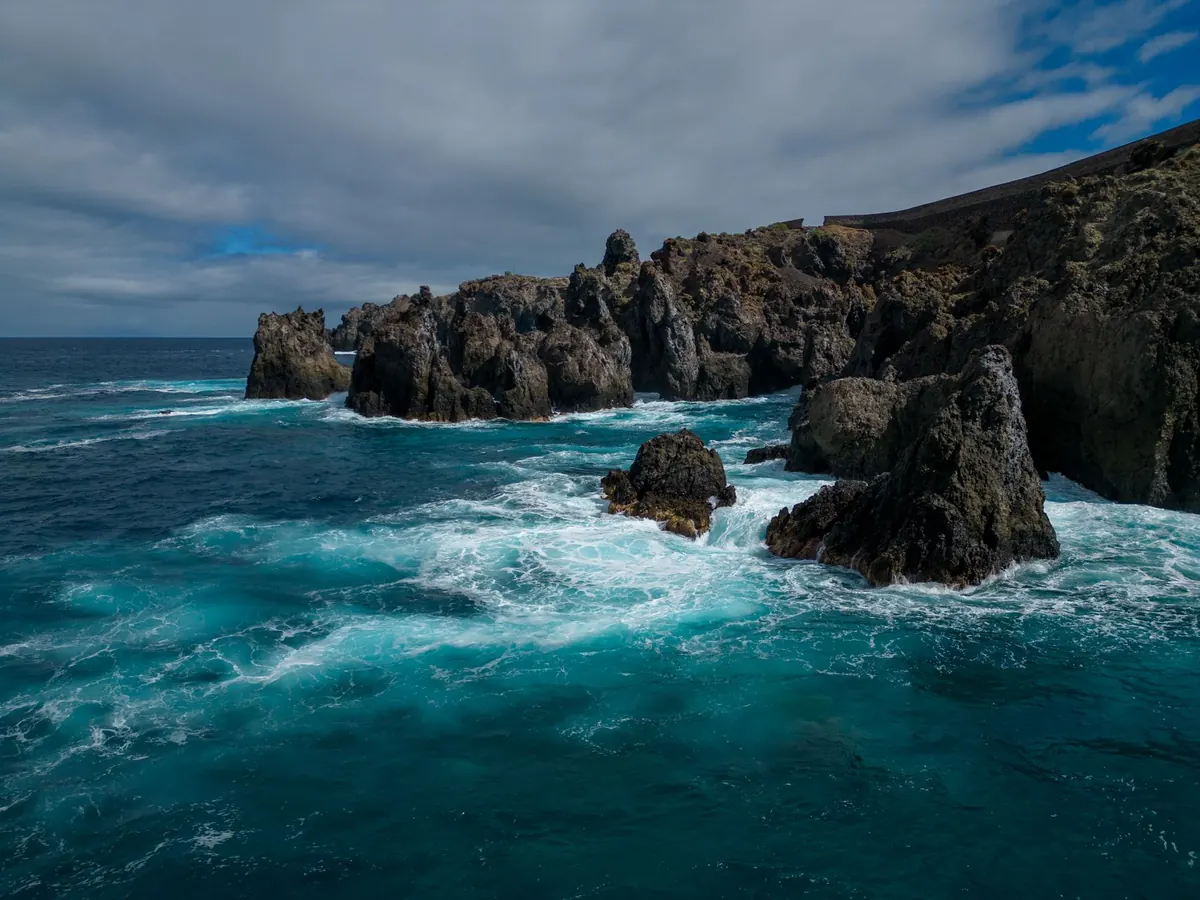
Park at the beach car park on a still July morning and you might wonder what all the fuss about coastal wind is about. Return at four in the afternoon, walk to the water's edge, and you will have your answer: sand stinging your ankles, a flag pulling hard at its pole, and a wind with nothing in common with the gentle breeze blowing through the town behind you.
Britain's coastline is windier than its interior for three reasons, and they stack. The sea offers almost no friction, so wind arrives at the shore still carrying the speed it built offshore. The coast takes the brunt of our prevailing south-westerlies. And land and sea heat at different rates, which builds a wind of its own along the shoreline. Knowing which engine is running on a given day makes a coastal walk, and a seafront garden, far easier to plan.
Wind is slowed by whatever it drags across. Over open sea the surface is smooth and there is little to trip the flow. Inland, hedges, houses, woods and hills chip away at it: speeds drop and the remaining air turns turbulent and gusty. A coastal town sits at the point where that resistance has barely begun.
Climb an inland hill and you may find the wind again, which is why coastal headlands and inland summits are the two places people most often get caught out.
Fetch is the distance of open water upwind of you, and it is the best shorthand for how much wind a particular beach will get. A south-westerly arriving in Cornwall or west Wales has crossed thousands of kilometres of Atlantic. The same direction reaching a sheltered east-coast estuary has crossed land for most of its journey. Two beaches, one forecast, wildly different days.
Even on a day when the general wind is light, the coast can generate its own. Land heats faster than water. Warm air over the fields rises, pressure near the surface drops a little, and cooler air slides in from the sea to fill the gap. That is a sea breeze — an onshore wind caused entirely by the contrast between a warm beach and a cool sea, and in spring and summer it is remarkably punctual.
What it does to your day depends on the larger wind. If that is blowing offshore, the sea breeze fights it: a calm morning can turn into a brisk afternoon, and the switch is often sudden enough to catch out paddleboarders and small boats. If the larger wind is already onshore, the sea breeze adds to it and the beach feels far windier than the forecast suggested.
Coastal topography organises wind into something far more local than any forecast can show.
Air forced over and around a headland speeds up, much as a river runs faster through a narrow section. Cliff-top paths are often the windiest places for miles, and the lee of a cliff is not automatically calm: expect downdraughts and eddies near the edge, particularly where a path turns a corner. Keep well back from exposed edges in strong gusts.
Coastal valleys, river mouths and gaps between hills act as channels. Wind pours down them and arrives at the shore with extra pace, sometimes from a direction that seems to contradict the wider picture. If you are choosing a route, remember that a wooded valley just inland can be almost still while the beach at its mouth is a wind tunnel.
On a broad beach, the strongest wind is usually at the water's edge. Step behind the first ridge of dunes or a shingle bank and you enter a different climate: quieter, warmer, and only twenty metres from a gale. On wide, flat beaches, low tide puts more open sand between you and shelter — and less distance between you and the sea.
On the coast, wind arrives with salt and, in winter, driven rain. Both leave marks on paintwork, metal hinges and mortar, so rinsing exposed metal and checking ridge tiles after a storm is worth the trouble.
For shelter, permeable beats solid almost every time. A slatted fence or a mixed native hedge filters the wind and drops its speed; a solid panel forces air up and over, then dumps it in a turbulent curl on the sheltered side, where it can be gustier than the open garden. Plant with salt in mind — sea thrift, tamarisk, sea buckthorn, hawthorn and holly cope with spray far better than tender shrubs. Secure gates, bins, furniture and anything light enough to lift before autumn gales, then check fence posts afterwards.
Before building a fence, windbreak or extension, check what your local planning authority allows and whether permission is needed. For anything structural, or for boundary questions with a neighbour, take professional advice rather than guessing.
Check the direction, then the gusts, then the time of day. Pick a route that gives you a sheltered return, or walk out into the wind and let it carry you home. Take a windproof layer, a hat that stays on, and a spare ten minutes in case the sea breeze arrives early. Coastal wind is not random: it is exposure, sea breeze and the shape of the land working together, and once you can name which one is at work, you can plan around it.
Photo: Artem Zhukov / Pexels